
HUMAN TECHNOLOGY FUTURE
Special company who focus on developing & manufacturing physical therapy and rehabilitation devices

Introduction
Cooling therapy can be basically divided into three groups: "conductive cold therapy", "airflow cold therapy" and "sublimation cold therapy".
Conductive cold therapy: The cooling is transmitted to the treatment by contact, however such direct contact is prohibited in the other two groups.
Sublimation therapy is the use of liquefied gas (nitrogen) to cool a point.
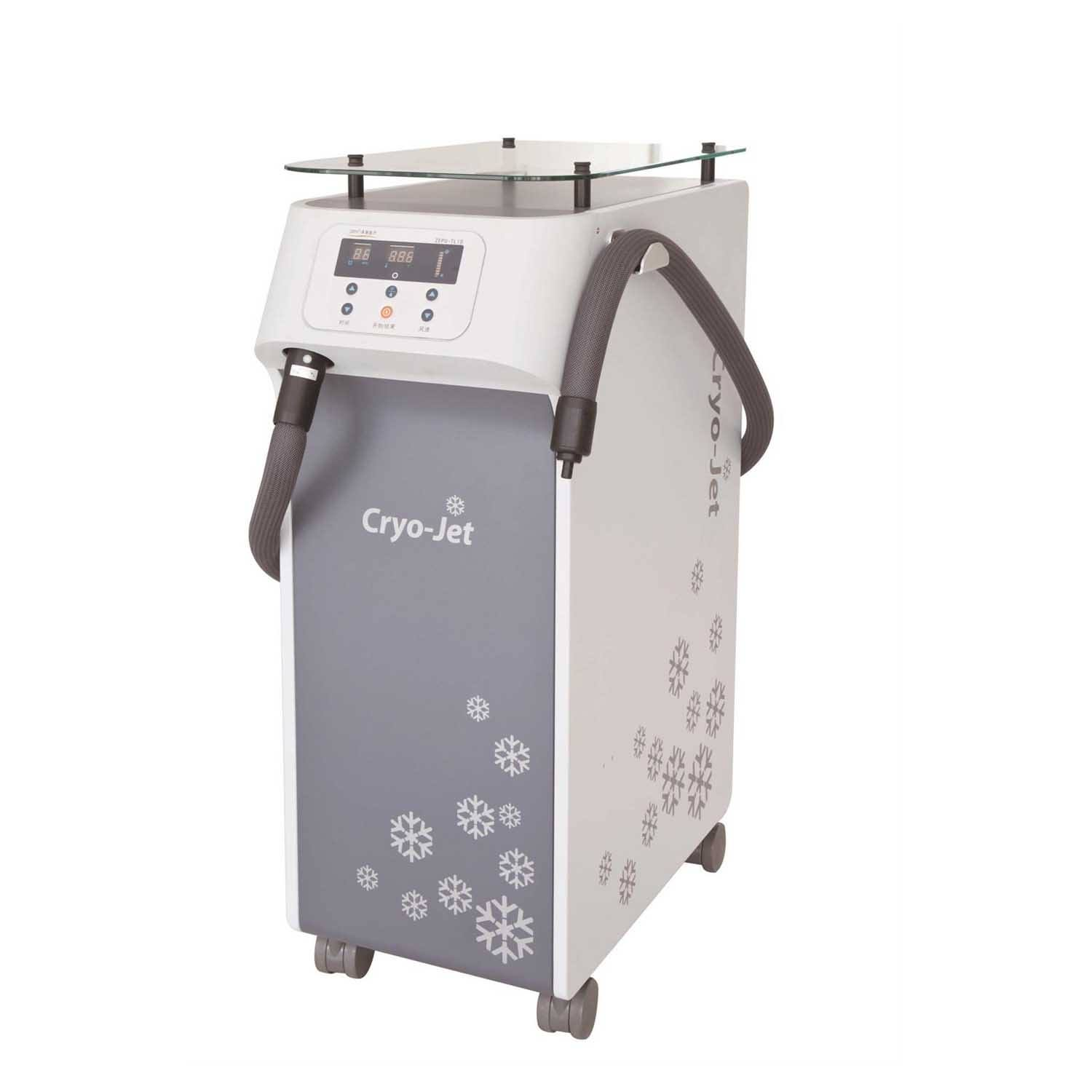
Airflow cold therapy: The surrounding air is used to cool the treatment area.
Principle
The role of cold therapy
Rapid local constriction of blood vessels
Local metabolism is reduced and metabolic function is regulated
Reduce acute inflammation
Slow down nerve conduction - Slow down motor and sensory nerve conduction
Reduce spasms because:
Decreased muscle spindle activity - Decreased the release rate of type Ⅰa and Ⅱ afferent fibers.
Reduce the activity of Golgi tendon organs -- reduce the release rate of Ⅰb afferent fibers.
Lehmann's (1990) study evaluated the effects of prolonged use of cold cooling on the calf muscles and found that the elastic stiffness of the muscles decreased by 3% to 10%.
Reduces pain/muscle spasms - raises neuralgia threshold
While reducing tissue elasticity, it increases tissue viscosity
Temporary increase in systolic and diastolic blood pressure
Releases a vasoactive substance (histamine) that helps repair damaged fibrous tissue
Features
Sports medicine and traumatology
Sprain/strain (acute)
Bursitis, tendinitis
rheumatology
Muscle prestretching
Muscle spasm
Alpha dystrophy
neuralgia
Postoperative surgery
pain
The inability of the body to adapt to changes in temperature due to anaphylaxis, hypersensitivity or inadequate circulation;
Heart disease or respiratory damage;
Peripheral vascular disease;
Loss of thermal sensitivity
Numb skin;
Cold allergic reaction;
Raynaud's disease;
Cryoglobulinemia;
Paroxysmal cold-blooded erythroalbuminuria;
An open wound.
Application

First class quality service and professional after-sales team.
Get in Touch
*We respect your confidentiality and all information are protected.
By clicking 'Allow All', you agree to the storage of cookies on your device to enhance site navigation, analyze site usage and assist with our marketing efforts.